P2PDEX is a fiat-to-crypto marketplace where your users post ads and trade directly: fiat moves bank-to-bank between them, and the crypto sits in an escrow contract you never hold. The ad board, an Express lane, a Block desk, merchant tools, payment rails, disputes and a self-custody wallet ship with it. We put your brand on it, configure your corridors, launch it for you, and hand over the source.
Ad board, Express, Block, merchant tiers, appeals and a dispute console: the parts your users expect from the venues they already use, without the custody exposure that comes with them.
You earn a fee on completed trades and hold nothing in between. Bank details show only after escrow, and an award can only ever go to the two addresses fixed at signing. Ask your counsel; we will give them the architecture note.
USD and EUR with SEPA Instant and domestic wire first, more rails behind them. Eligibility is decided per country, fiat, rail, asset and network, so you open exactly the markets you mean to.
The three largest peer-to-peer desks sit inside the three largest exchanges. None publishes its P2P volume on its own, so these are the parents' reported figures.
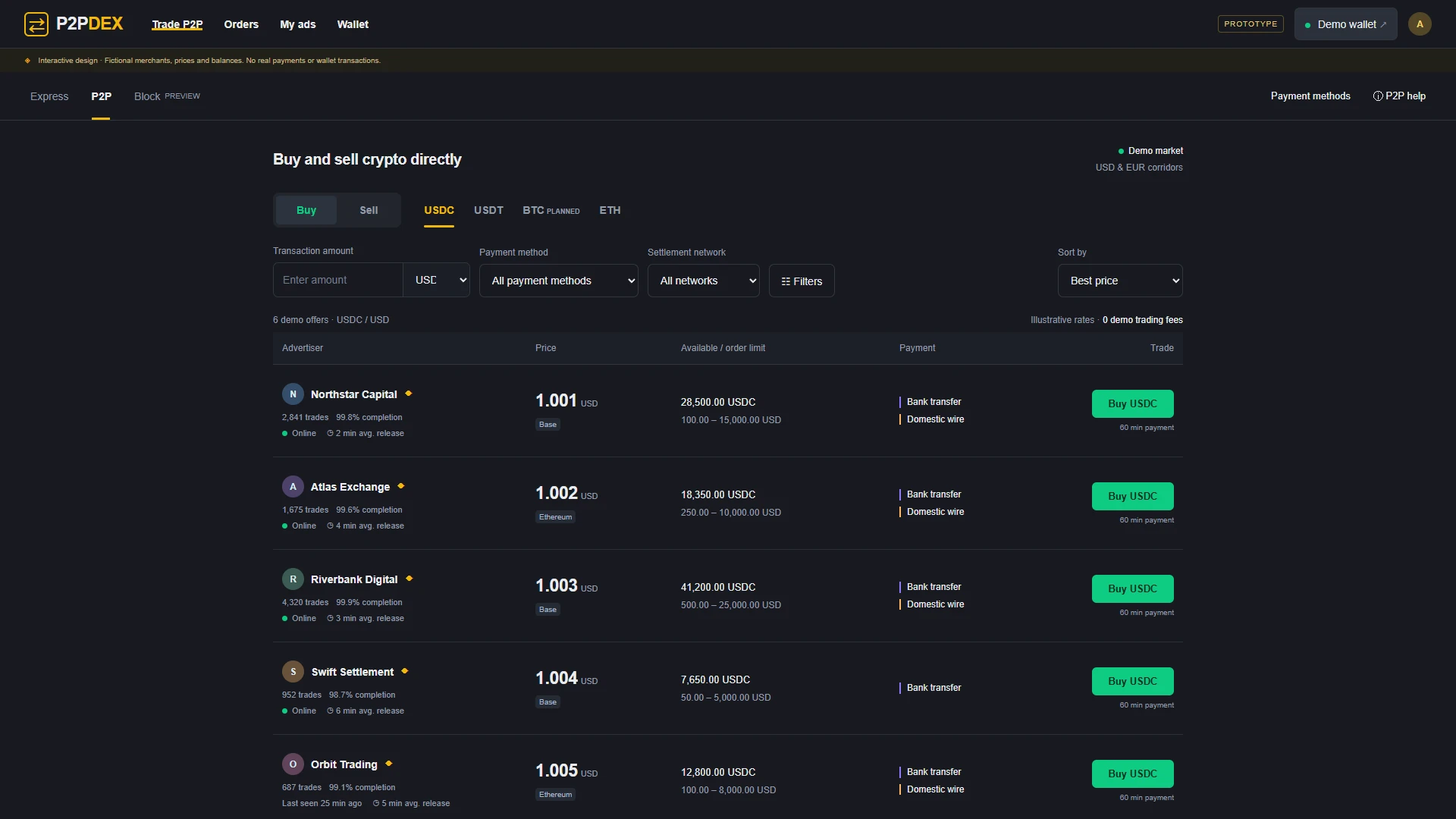
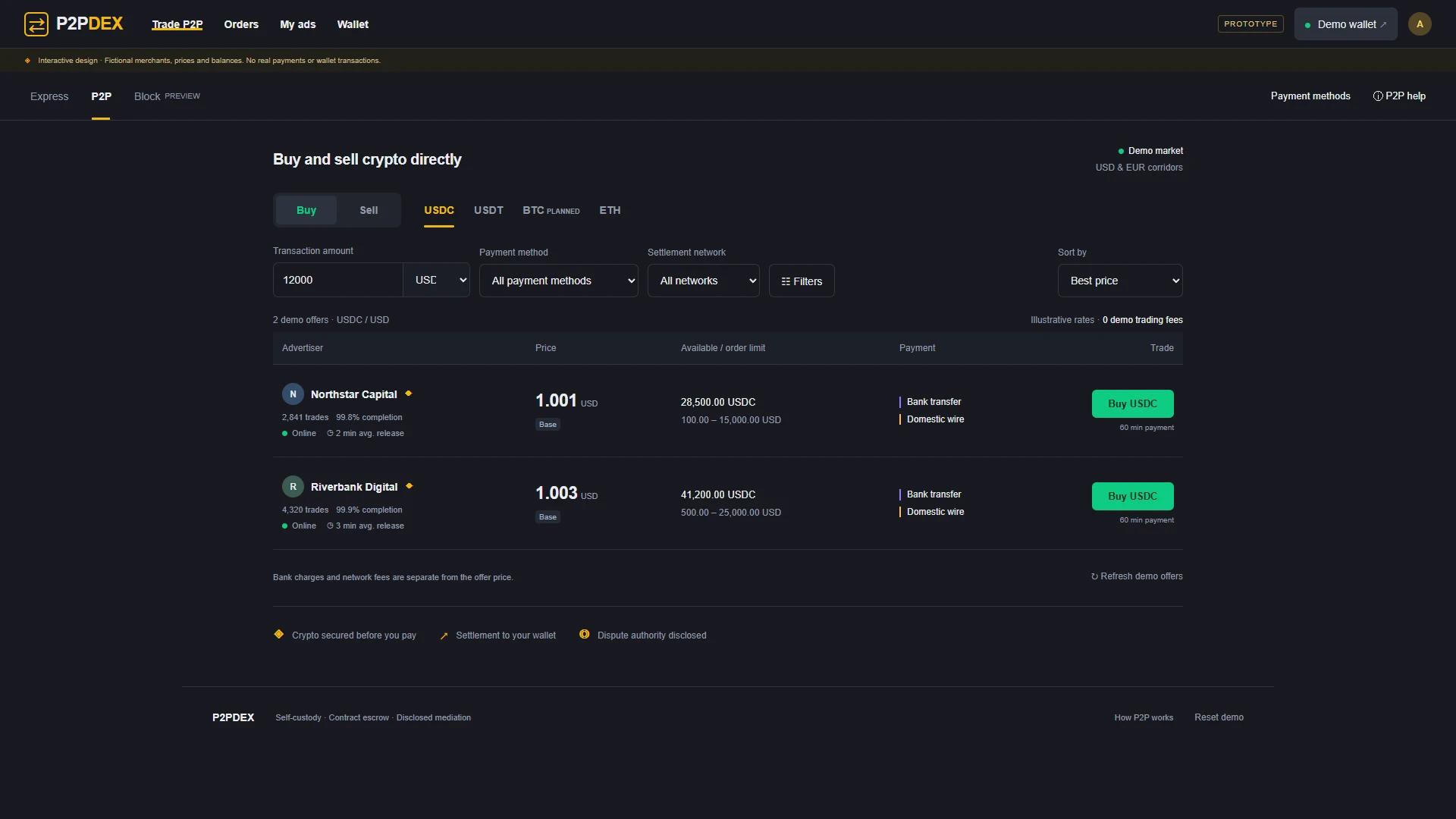
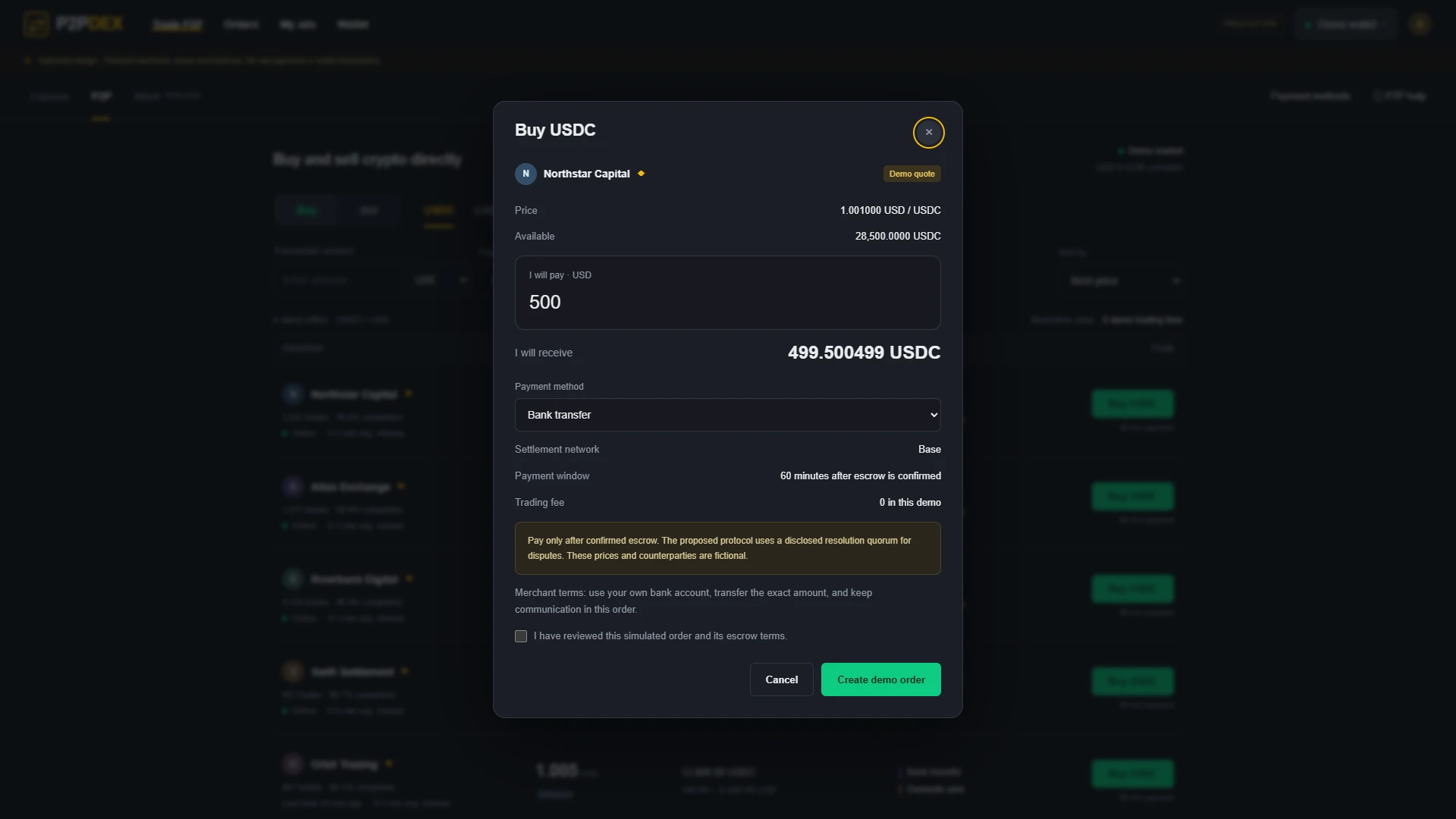
The board reads like the large P2P desks: advertiser, price, available amount and order limits, payment rails, network. Filter by side, asset, fiat, amount, rail and settlement network; sort by best price, completion rate or release speed. Type an amount and the offers that cannot cover it drop out, with the blocking constraint named, so nobody wastes a quote.
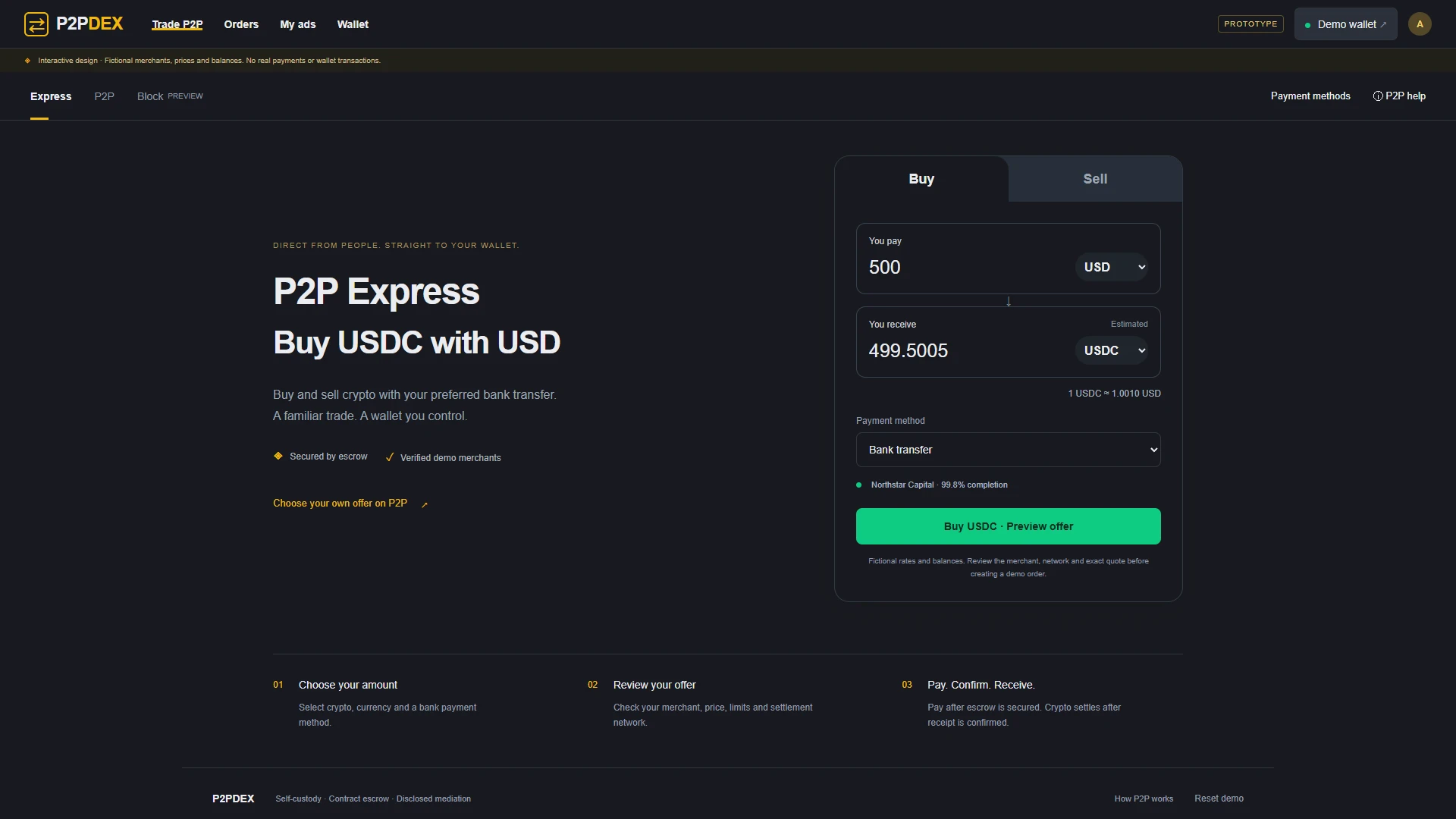
Express is the one-card path for users who do not want to read a board: enter what you want to pay or receive and get matched to an eligible merchant on best net price, with the counterparty previewed before anything is committed. Flip direction and the amount, fiat, asset and rail survive; change fiat and only an incompatible rail resets.
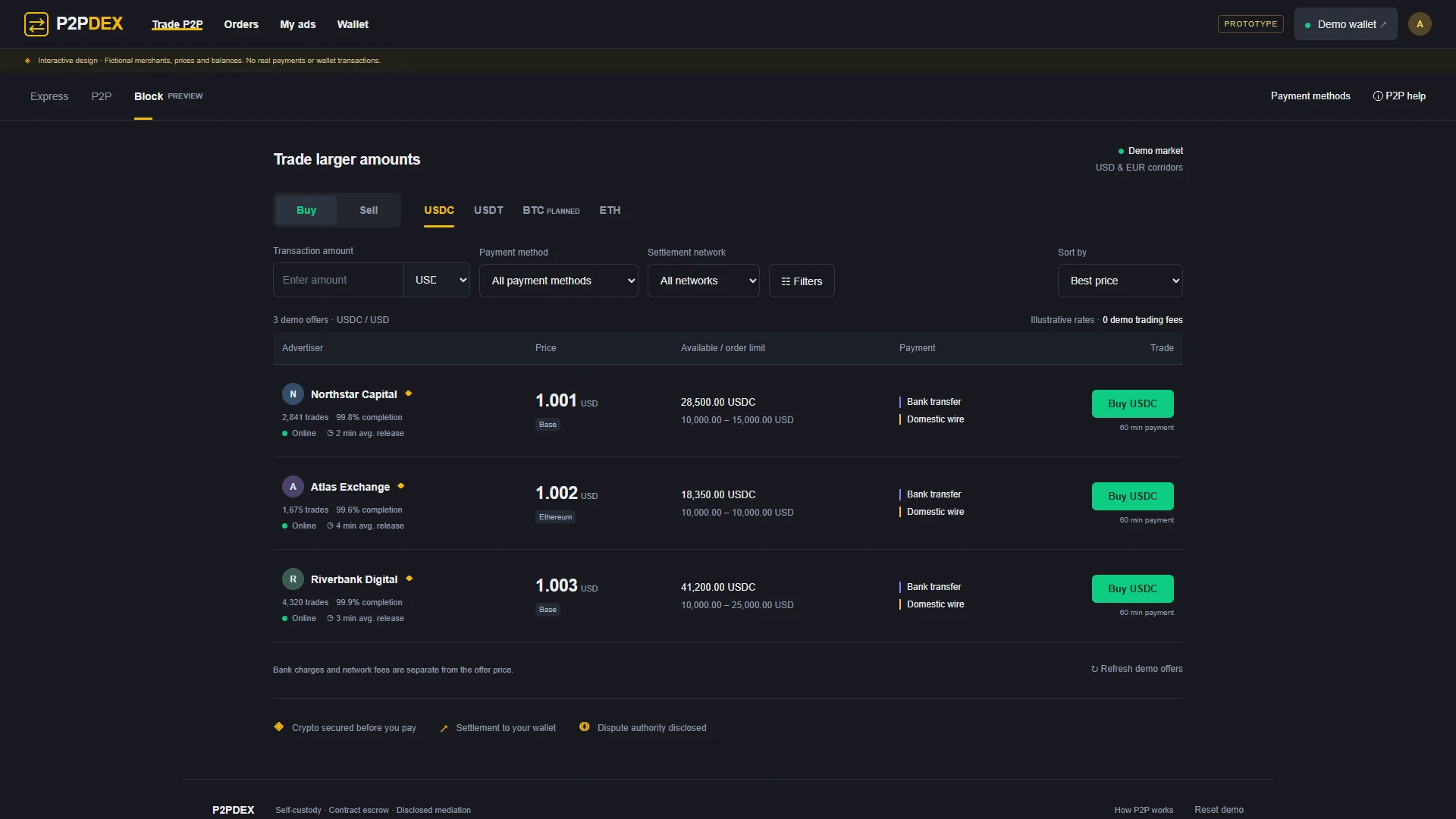
Block trading has its own minimum, its own merchant cohort and its own evidence policy, under the same escrow model. The prototype enforces a fiat-adjusted minimum of 10,000 and restricts the lane to verified merchants. Private block ads for professional merchants are on the plan you receive.
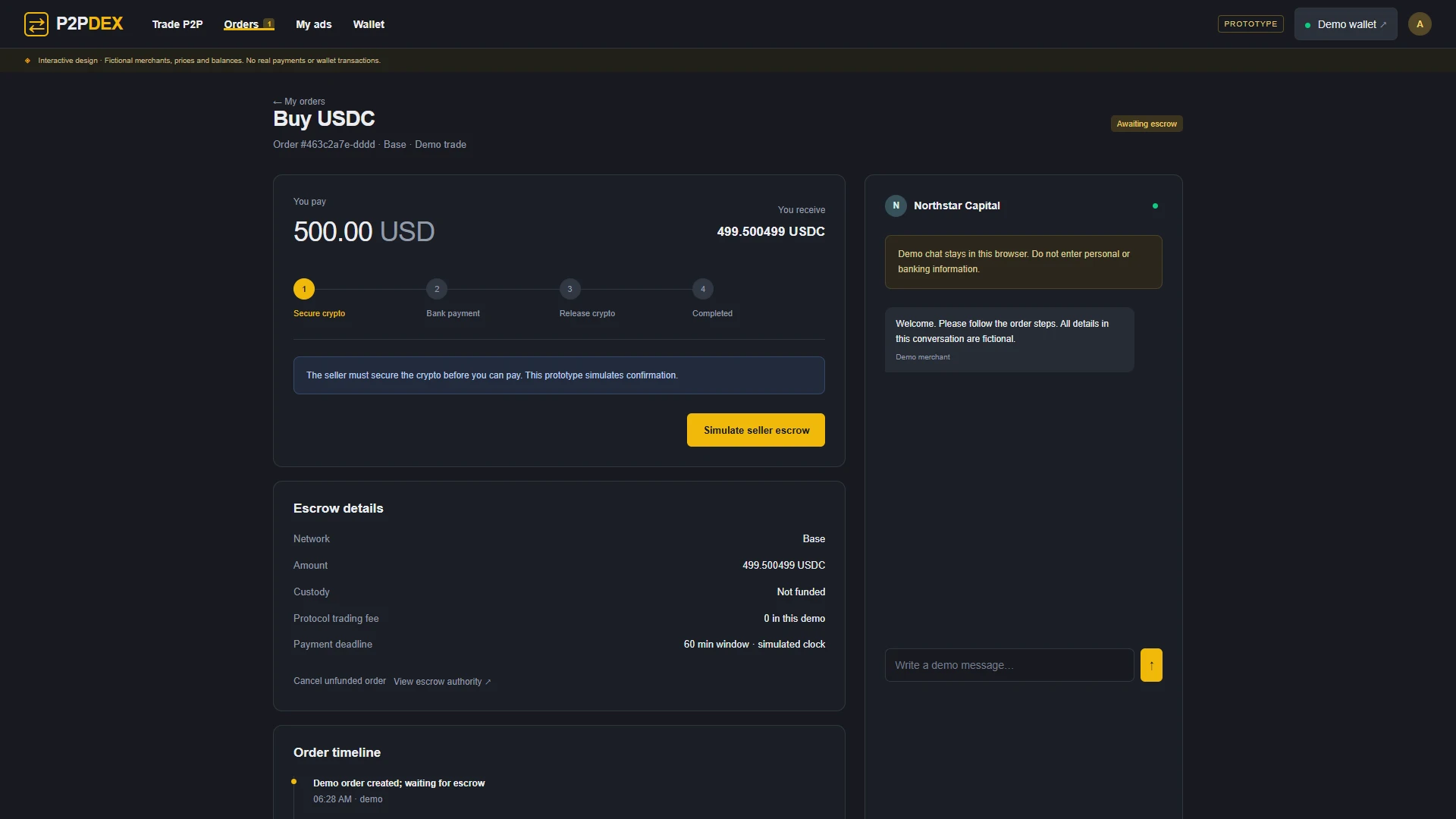
Taking an offer freezes a signed quote: parties, fiat amount, crypto amount, token and chain, fee, expiry and dispute policy. The seller funds exactly the order quantity into the escrow contract. Until that lock is confirmed on-chain, the buyer sees "waiting for crypto to be secured" and no bank details at all. That one rule removes the fake-payment play.
An order moves through quoted, funding, payable, paid-claimed, release-pending and completed, with refund-requested, disputed and award-pending branches. "Payment sent" is a buyer claim and never releases by itself. Deadlines live on the server as timestamps and the visible timer is derived from them, so a client clock can never move money.
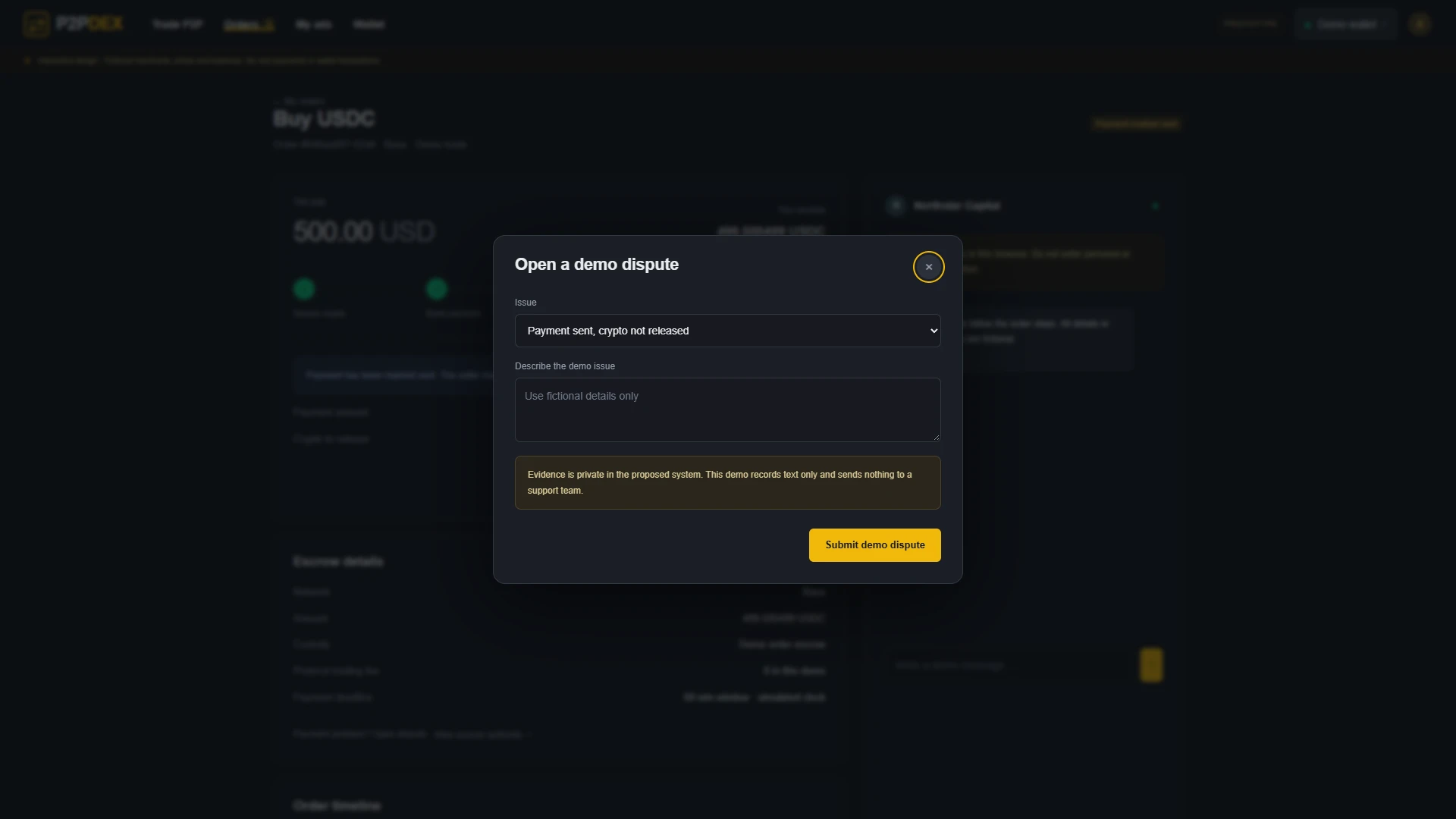
Either side can open a dispute from a payable or paid order. The trade locks, both sides add scoped evidence against response deadlines, and a case owner takes it to award. An award can release to the fixed buyer, refund the seller, or split between the two; it can never pay a third wallet, and silence never settles a case. Your support team is never the one holding the money.
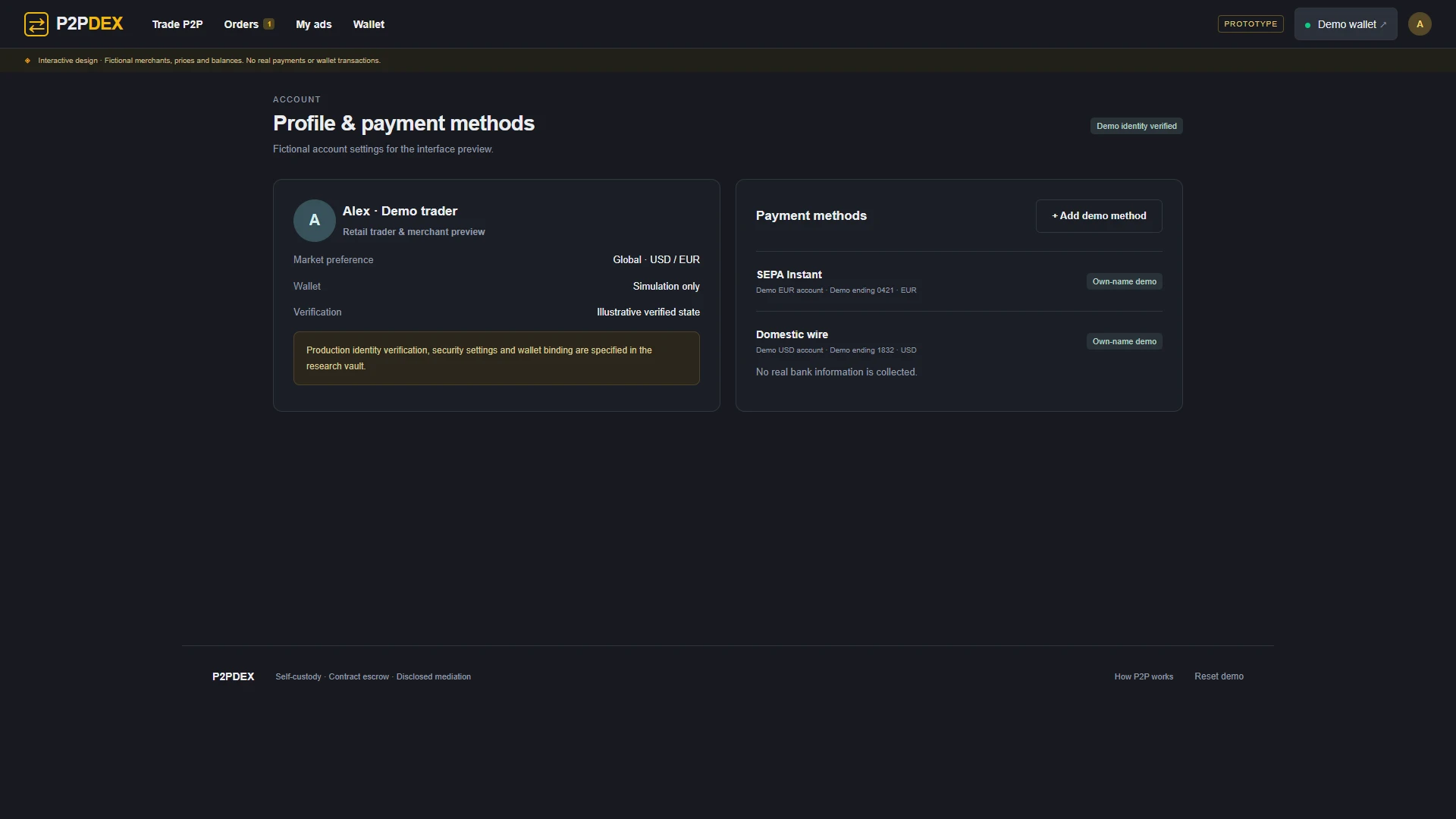
Rails are specific, not a generic "bank transfer" form: SEPA Instant and USD domestic wire first, standard SEPA, FedNow, RTP and ACH credit next. Each rail carries its own payment window. Recipient details are revealed only after escrow, encrypted at rest, kept out of logs and snapshotted to the order so a later edit cannot change live instructions.
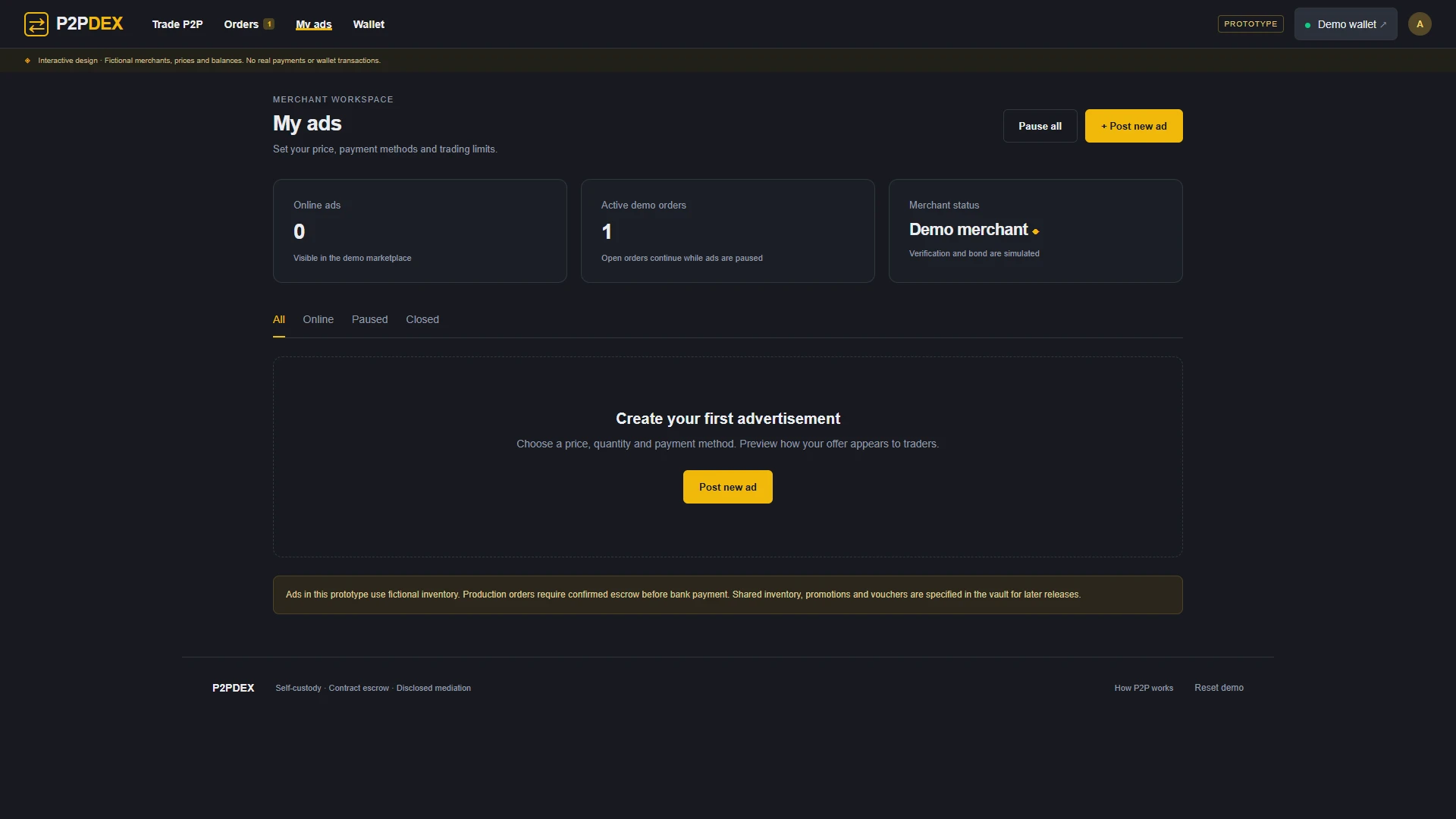
A three-stage wizard posts an ad: asset and price, fixed or floating over an index with floor and ceiling; quantity, limits, rails and payment window; conditions, terms and auto-reply. Ads go draft, online, paused, depleted, closed. Pausing stops new orders and keeps open trades; editing creates a new version and accepted terms stay immutable. Liquidity your merchants manage is liquidity you do not have to.
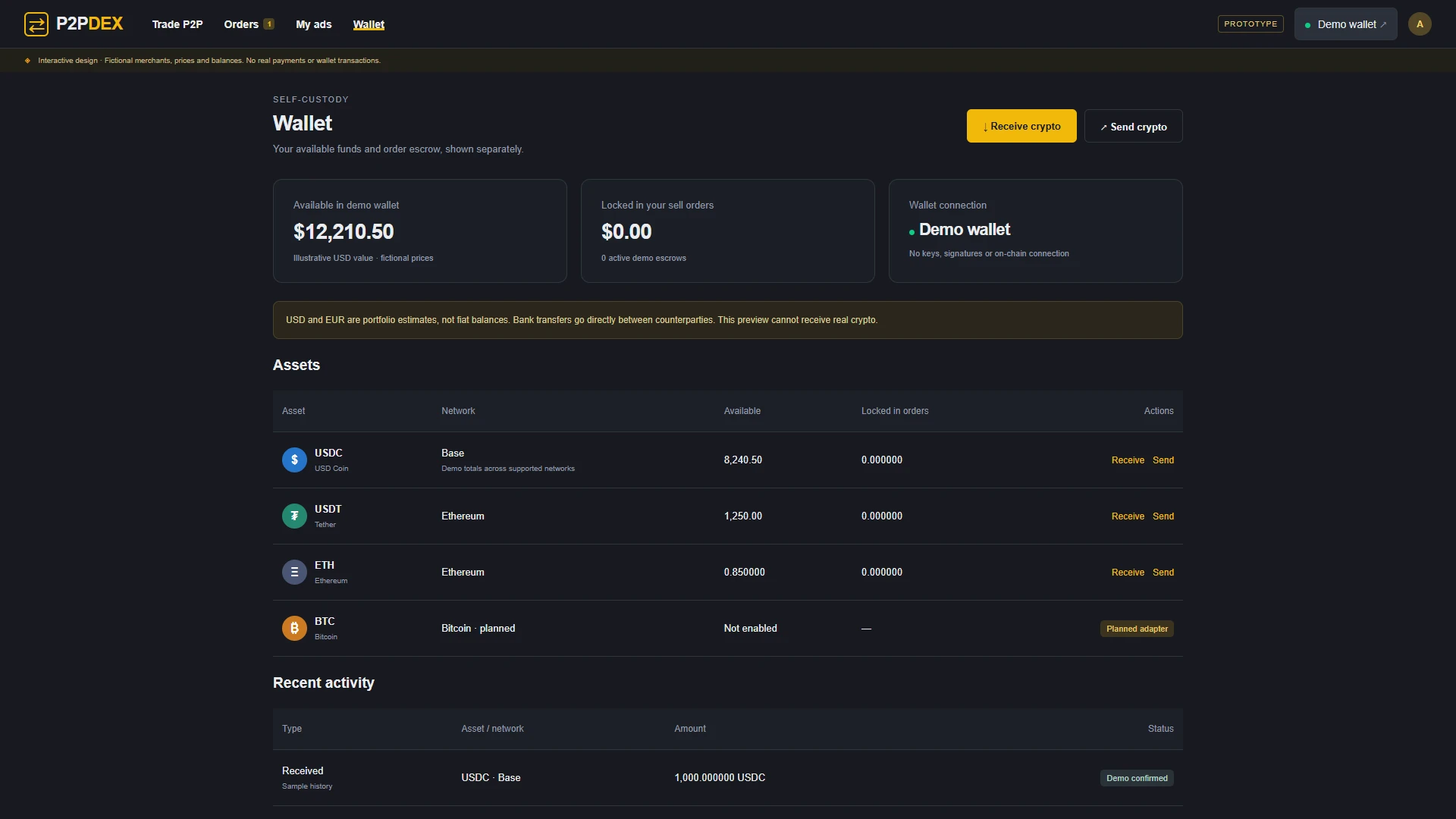
The wallet shows personal funds, available trading liquidity, amounts locked in orders, merchant bond and pending, without double counting, per asset and per network. Sending needs destination, amount and gas review before signing; a withdrawal above the available balance is refused. Fiat figures are labelled as estimates, never as withdrawable money, because you never hold any.
The desk exists. The four weeks go on your brand, your corridors, your rails, your merchants and your escrow.
Forty-five minutes with the engineers who will do the work; you leave with the corridors, the rails, the plan and a number. Then name, colours and logo, and the fiats, assets and networks you open.
Rails and payment windows per corridor, your fee, eligibility per country and network, and your first merchants onboarded with their ads.
The escrow contract on the EVM network you choose, and the trade, dispute and wallet flows run against your configuration with your merchants.
The container on your host or ours, TLS, monitoring. Then the source, the contracts, the docs and the keys.
Side, asset, network, fiat, fixed or floating price, quantity, limits, rails, payment window and terms. It appears on the opposite side of the board.
Preflight checks eligibility, balance, network, quote expiry and rail support; a signed quote freezes the terms.
The seller funds the exact quantity into the contract. Only then does the buyer see recipient, amount, rail, reference and deadline.
The buyer transfers from an own-name account and marks paid. The seller checks funds, payer name and amount, then signs the release.
Unpaid past deadline: refund request plus a challenge window. Contested: a dispute freezes the trade and a disclosed quorum awards.
The operator holds no fiat and no user crypto. The contracts are the source of truth for custody, escrow state and permitted payout addresses; the database is a replayable projection that cannot override them. There is no escrow sweep function, and support cannot edit an address to redirect funds. You get the front end, the contracts, the services and the plan.
P2PDEX is sold as a white-label installation plus the customisation that makes it yours. What that costs depends on what you bring and what you want changed, so we give it to you in person: forty-five minutes with the engineers who would do the work, and you leave with a scoped plan, a four-week schedule and one number.
Bring your corridors and your rails to a launch review. You leave with a scoped plan and a number.